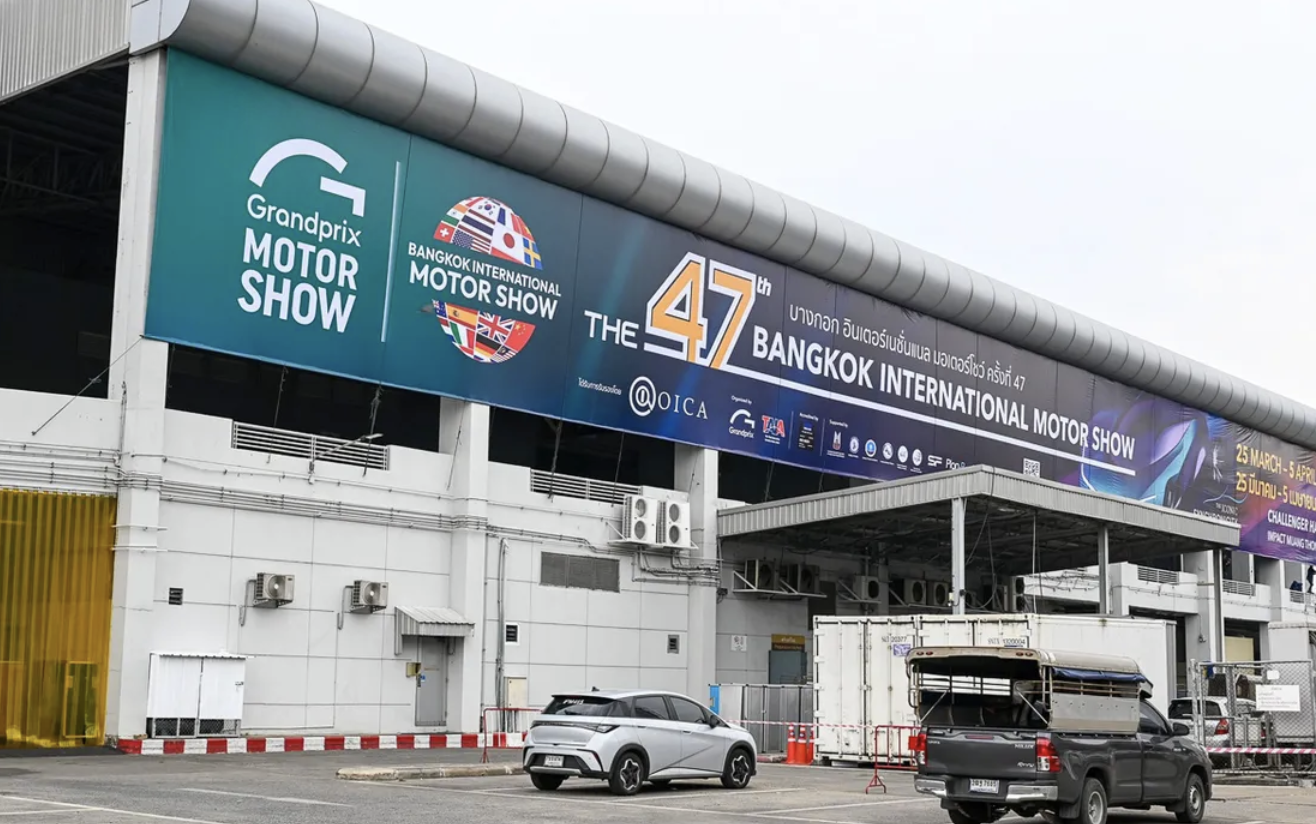
Summary By: eMotoXThe 47th Bangkok International Motor Show in 2026 has marked a significant turning point for electric vehicles (EVs) in Thailand, signalling a potential tipping point in the country’s automotive landscape. Traditionally dominated by internal combustion engine (ICE) vehicles, Thailand’s market is now witnessing a dramatic shift as manufacturers aggressively compete in the sub-700,000 Baht price segment. This change is partly driven by the Thai government’s reduction of NEV purchase tax incentives, prompting brands to slash prices by up to 30% to maintain affordability and stimulate demand. The event highlighted a broadening variety of EV models, reflecting a structural transformation in a market long reliant on diesel pickups and petrol sedans.
Chinese automakers have emerged as the dominant force at the show, expanding their presence from a handful of brands in 2023 to over fifteen marques in 2026. This surge includes both established names like BYD, MG, and Great Wall Motor, as well as new premium and sub-brands aiming to cover every price bracket. Chinese companies have overtaken the traditional Japanese leaders in vehicle bookings, with BYD securing the top spot and Chinese marques occupying eight of the top ten positions. Their aggressive pricing and diverse offerings, such as BYD’s Atto 1 and Aion’s UT hatchback, have effectively disrupted the market, pushing legacy brands to the fringes.
Japanese manufacturers have responded with a more robust counteroffensive this year, introducing several new EV models and hybrids to reclaim market share. Honda’s e:N2 SUV and the WN7 electric motorcycle represent a strategic push into both four- and two-wheel electric segments. Nissan and Toyota have also unveiled new electric and hybrid models, while Isuzu’s D-Max EV stands out as a production-ready electric pickup truck designed to meet the practical needs of Thai consumers, maintaining payload and towing capacities comparable to its diesel predecessor. These moves indicate a renewed commitment by Japanese brands to compete more effectively in Thailand’s evolving EV market.
European manufacturers, meanwhile, have focused on reinforcing their premium market positions, showcasing high-end electric models such as BMW’s iX3 Neue Klasse. The show also expanded beyond traditional vehicles, with companies like XPENG introducing humanoid robots to underline their technological ambitions beyond the automotive sector. This broadening scope reflects the increasing convergence of mobility, technology, and lifestyle in the electric future. The Bangkok Motor Show thus not only revealed a shift in vehicle preferences but also highlighted the intensifying competition and innovation shaping Thailand’s transition to electric mobility.
Looking ahead, the 2026 Bangkok Motor Show suggests that Thailand is on the cusp of a fundamental change in its automotive identity. The rapid growth of Chinese EV brands and the strategic responses from Japanese and European players underscore a market in flux, driven by affordability, technology, and consumer demand. With government policies evolving and manufacturers adapting quickly, Thailand’s role as the “Detroit of the East” may soon evolve into a new hub for electric mobility in Southeast Asia. The coming years will