Article By:
CyclingNews
2026-04-27 11:07:19
'We must keep fighting for the future of the sport' – Demi Vollering calls for longer TV coverage of women's racing following Liège-Bastogne-Liège win
Summary By: eMotoX
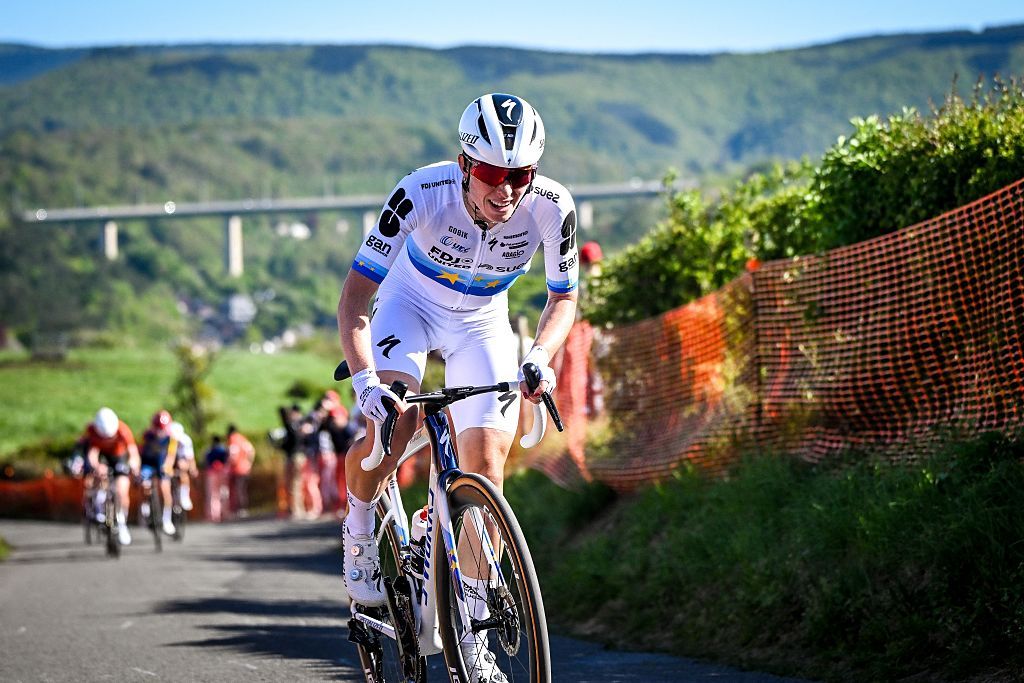
Demi Vollering secured a landmark third victory at the Liège-Bastogne-Liège Femmes, underscoring her dominance in the 2026 Classics season with wins also at Omloop Het Nieuwsblad, the Tour of Flanders, and La Flèche Wallonne. Despite her success, Vollering used the occasion to highlight the disparity in television coverage between men’s and women’s races. While the men’s event enjoyed live broadcast for 150km of its 259.5km distance, only around 45km of the women’s race was televised, a gap she believes undermines the sport’s growth and visibility.
Reflecting on the progress of women’s cycling, Vollering recounted her early experiences riding the hills around Liège as a club rider before the women’s race was established in 2017. She described the race as a symbol of how far the sport has come but emphasised that there remains significant room for improvement, particularly in media exposure. Vollering questioned whether her decisive attack on the Côte de la Redoute was even visible to viewers, pointing out that much of the race’s earlier action went unbroadcast.
Vollering proposed practical solutions to enhance coverage, suggesting that broadcasters could run simultaneous feeds for men’s and women’s races and switch between them to maintain viewer interest. She argued that once the outcome of the men’s race becomes predictable, attention could shift more frequently to the women’s event, thereby increasing exposure without disrupting the overall broadcast schedule. Her comments reflect a broader call within the cycling community to push for equal treatment and greater investment in women’s racing.
The rider’s remarks also resonated with fans and insiders who have expressed frustration over the limited live coverage of women’s cycling. Vollering stressed the importance of continuing the conversation around this issue to drive change, acknowledging that many supporters are eager to see more comprehensive broadcasts. Her advocacy highlights the ongoing challenges faced by women’s cycling as it strives for parity and recognition on the global stage.
Looking ahead, Vollering’s victory and her outspoken stance on media coverage could influence how organisers and broadcasters approach women’s races in the future. With the sport gaining momentum and top athletes like Vollering leading the charge, there is growing pressure to ensure that women’s cycling receives the platform it deserves. Enhanced television coverage would not only benefit the athletes but also help to expand the sport’s fanbase and commercial appeal.