Article By:
Cycling Weekly
2026-04-12 10:24:52
Why was Tadej Pogačar running mismatched tyres and wheels at Paris-Roubaix?
Summary By: eMotoX
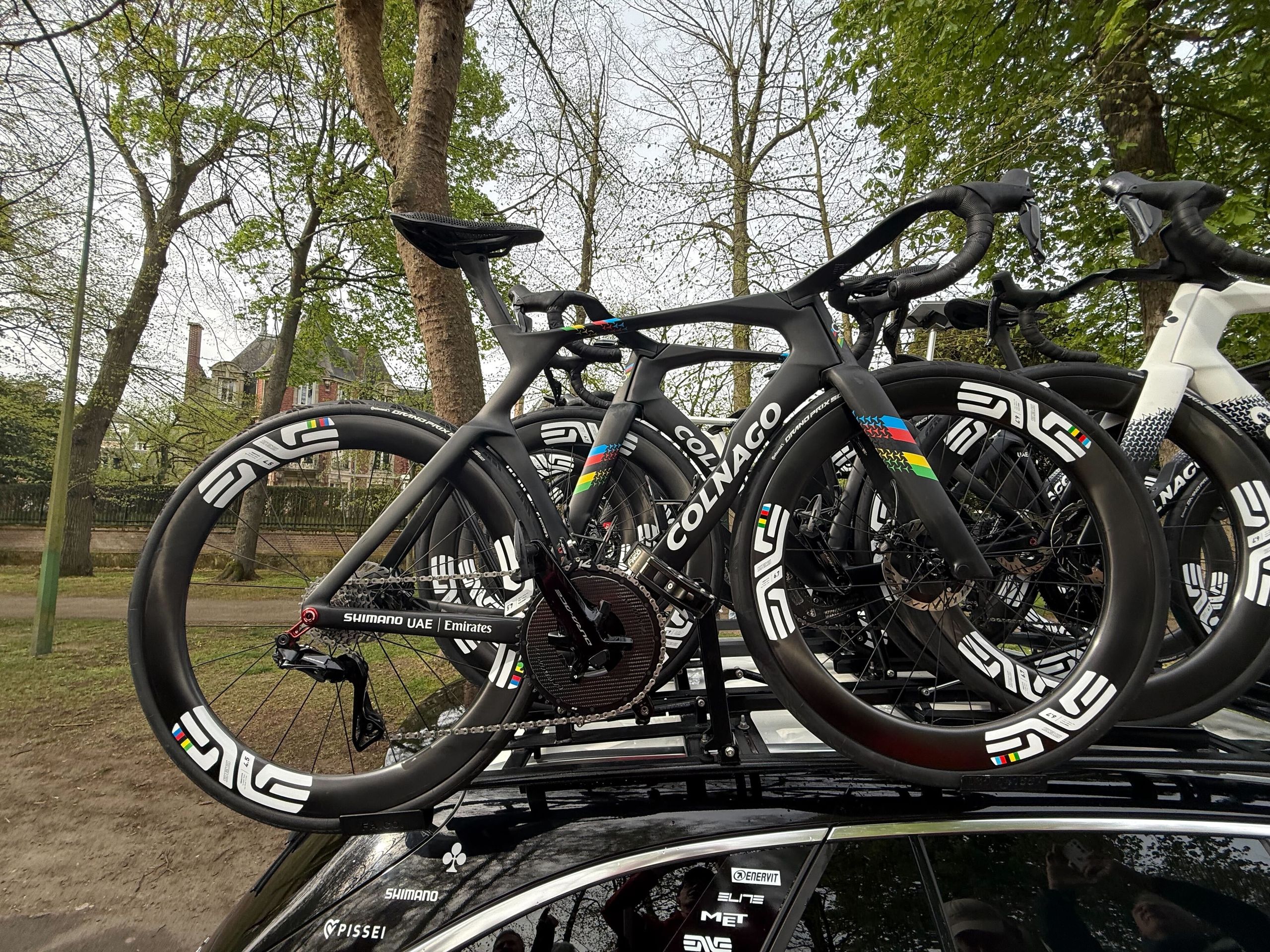
Tadej Pogačar’s bike setup for the 2026 Paris-Roubaix revealed a deliberate prioritisation of aerodynamic efficiency over traditional comfort considerations, even on the notoriously brutal cobbled course. Rather than switching to a more compliant frame like the Colnago V5RS, Pogačar opted to ride his more aero-focused Colnago Y1RS, accompanied by four identically configured spare bikes. This choice underscores his team’s belief that marginal aerodynamic gains could prove decisive in the race, despite the additional physical toll imposed by the rough terrain.
A notable aspect of Pogačar’s setup was the unconventional use of mismatched tyres and wheels, designed to maximise clearance and optimise performance. The front tyre was a relatively wide 35mm Continental GP5000, squeezed into the fork to help absorb impacts through the handlebars, while the rear featured a narrower 32mm tyre constrained by frame clearance. This was paired with a deep-section 60mm Enve 6.7 SES front wheel offering a wide rim bed to support the larger front tyre, and a slightly shallower 50mm 4.5 SES rim at the rear, balancing aerodynamic benefit with practical fitment. The subtle 10mm difference in rim depth between front and rear reflects a carefully calibrated approach to maximise speed and stability.
Comfort adaptations were also evident, albeit subtle and functional rather than overt. Pogačar’s bike featured thick, possibly double-layered bar tape and foam padding behind the Shimano Dura-Ace brake levers, likely intended to reduce the harsh vibrations transmitted through the cockpit and prevent unintentional brake engagement on the cobbles. These small modifications highlight the fine balance sought between maintaining control and minimising fatigue over the punishing parcours.
The drivetrain setup further emphasised efficiency and momentum retention, with a 1x configuration featuring a large 56-tooth Carbon-Ti chainring tailored for the fast, flat sections of the race. Additional high-end Carbon-Ti components, including axles and a customised rear mech hanger, suggested a focus on weight savings and mechanical precision. Pogačar’s stealthy black paint scheme may also have contributed minor weight advantages, while the presence of multiple spare bikes demonstrated his team’s comprehensive preparation for the unpredictable demands of Paris-Roubaix.
Overall, Pogačar’s equipment choices for Paris-Roubaix reflect a sophisticated and highly calculated approach, blending aerodynamic optimisation with targeted comfort enhancements and mechanical reliability. His willingness to accept increased physical strain in pursuit of speed underscores the evolving nature of race strategy in the electric era of professional cycling, where marginal gains can be decisive on the sport’s toughest terrain.