Article By:
CyclingNews
2026-04-11 13:00:20
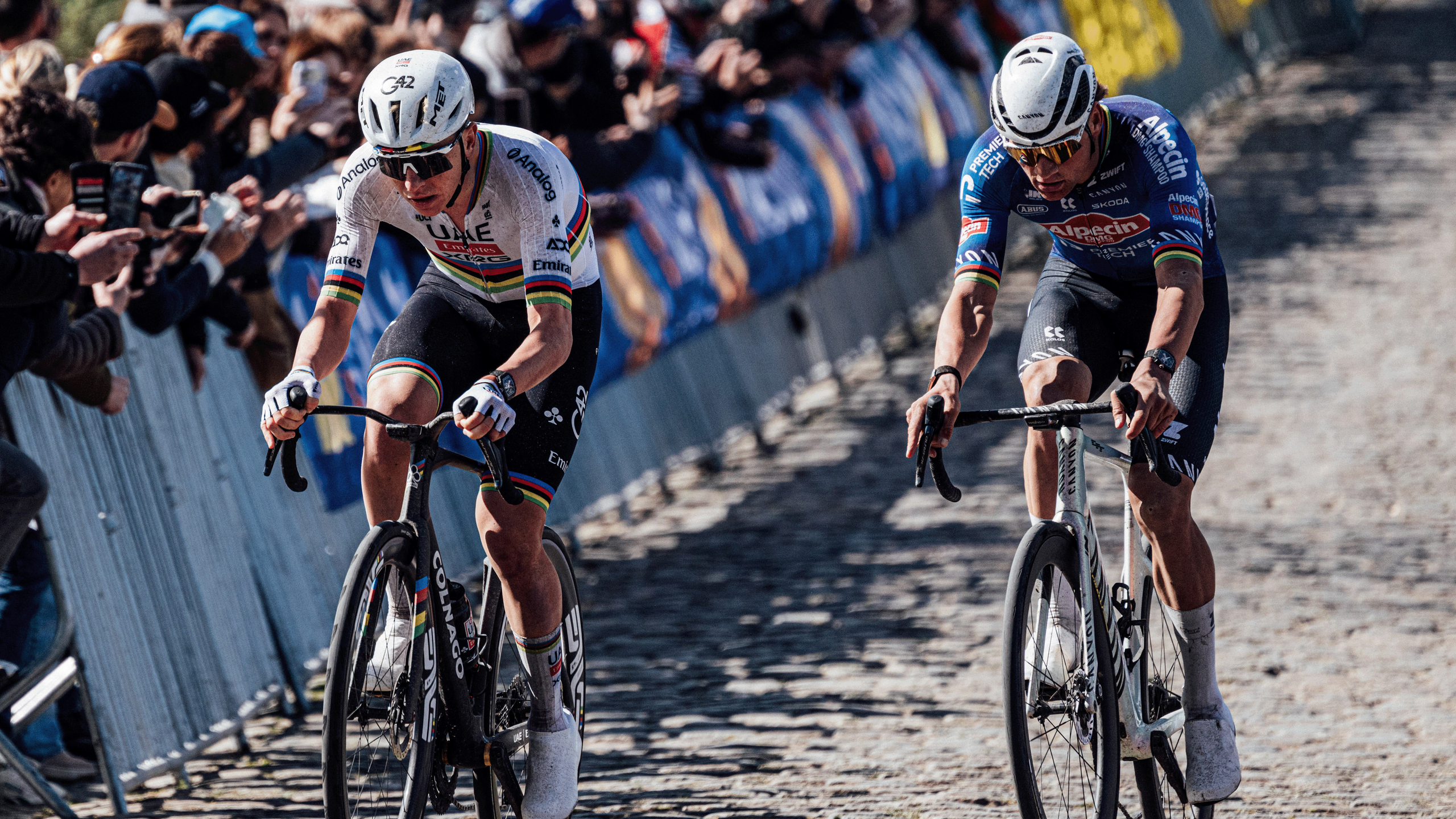
Paris-Roubaix brings Tadej Pogačar vs Mathieu van der Poel round three in 2026, but who has the better supporting cast for the hellish pavé? – Analysis
Summary By: eMotoX
The upcoming 2026 Paris-Roubaix promises a compelling showdown between Tadej Pogačar and Mathieu van der Poel, marking their third clash of the season after Pogačar’s victories at Milan-San Remo and the Tour of Flanders. While Pogačar has demonstrated his climbing superiority on hilly courses, Paris-Roubaix’s flat, cobbled terrain favours Van der Poel’s technical skills and raw power. Despite Van der Poel’s dominance in recent editions of Roubaix, Pogačar’s current form and accumulated experience on the pavé suggest he remains a formidable contender, with both riders entering the race in peak condition.
Team dynamics will play a crucial role in the race outcome, as both UAE Team Emirates-XRG and Alpecin-Premier Tech field strong seven-man squads. Pogačar’s team has been slightly weakened by the absence of Tim Wellens due to injury, whereas Van der Poel’s support has been affected by Gianni Vermeersch’s move to Red Bull-Bora-Hansgrohe. Nevertheless, each team boasts a blend of rising talent and experienced classics specialists who will be instrumental in controlling the race and supporting their leaders through the brutal cobbled sectors.
Key support riders such as Florian Vermeersch for Pogačar and Jasper Philipsen for Van der Poel could be decisive in the race’s tactical battles. Vermeersch has been pivotal in recent cobbled races, often setting a punishing pace and providing a strong lead-out for Pogačar, while Philipsen’s sprinting prowess and versatility have complemented Van der Poel’s attacks in previous editions. Philipsen’s recent illness may slightly diminish his effectiveness, but his recent win at In Flanders Fields indicates good form, suggesting both riders could be critical in shaping the race’s final phases.
The broader matchups within each team highlight a fascinating contrast of experience and emerging talent. For instance, Nils Politt brings a wealth of Paris-Roubaix knowledge to Pogačar’s side, while Tibor Del Grosso represents fresh potential for Van der Poel’s squad. These individual battles underscore the depth and strategic complexity behind the headline rivalry, as each supporting rider’s role could influence the race’s chaotic and unpredictable nature.
With the brutal pavé sectors looming, the 2026 Paris-Roubaix is set to test not only the physical limits of these two superstars but also the strength and cohesion of their teams. The race could well hinge on tactical decisions and the ability of each squad to protect and position their leader at critical moments. As Pogačar seeks to extend his Monument tally and Van der Poel aims to reclaim his throne on his favoured terrain, the event promises to be a thrilling chapter in one of cycling’s greatest rivalries.