bicycle news article header featuring cycling news, bike updates, reviews and industry insights

News Menu

latest eBike news aggregator covering electric bike updates, reviews and industry trends
Click for eBike News
electric motocross news feed with latest dirt bike updates, reviews and industry insights
Click for eMotocross News
latest eScooter news aggregator featuring electric scooter news feed, updates, reviews and industry trends
Click for eScooter News
electric vehicle news aggregator featuring latest EV updates, charging and technology news
Click for EV news
Article By:
CyclingNews
2026-04-08 10:16:43

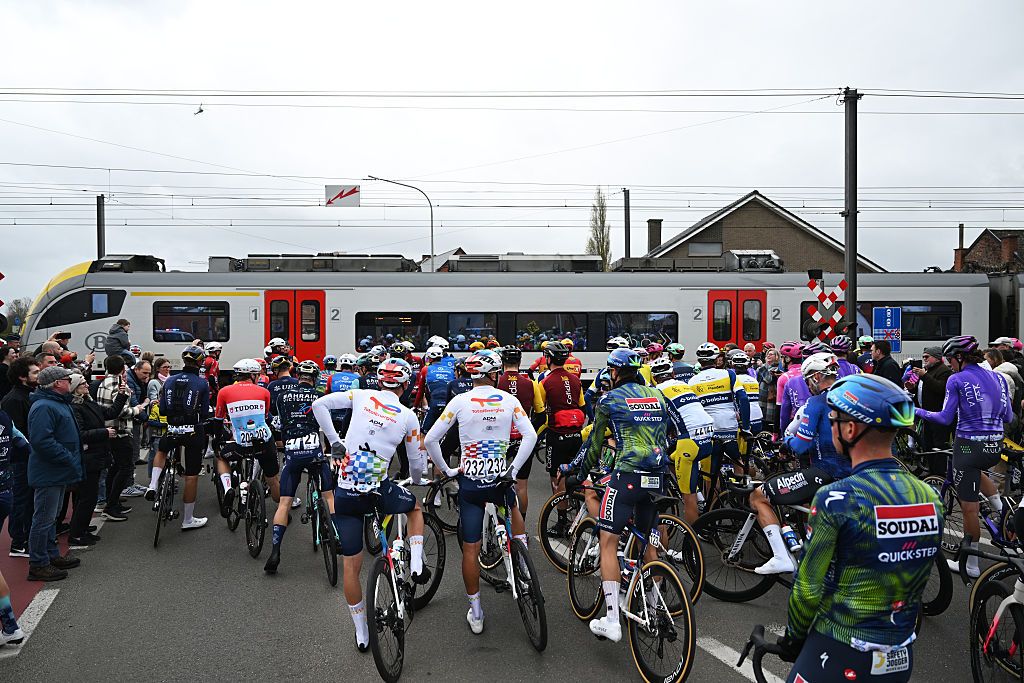
Investigation identifies 54 riders as skipping level crossing red signal at Tour of Flanders

Summary By: eMotoX
Fifty-four riders have been identified as having breached traffic regulations by running a red signal at a level crossing during the men’s Tour of Flanders, according to the East Flanders Public Prosecutor’s Office. This group, representing nearly a third of the 175-strong peloton, ignored the closed crossing with 213 kilometres remaining in the race, causing a split in the field. Although UCI rules prescribe fines, yellow cards, or disqualification for such offences, no immediate penalties were issued to those involved, including race winner Tadej Pogačar and third-place finisher Remco Evenepoel. The legal ramifications are significant, as ignoring a level crossing red light is classified as a fourth-degree offence under Belgian traffic law, carrying potential fines between €320 and €4,000 and an eight-day driving ban. The prosecutor’s office emphasised the serious safety risks posed by such actions to both riders and the public, indicating that the investigation remains ongoing and that out-of-court settlements might be pursued. This development highlights the tension between race regulations and national traffic laws, placing riders under scrutiny beyond the usual sporting disciplinary framework. Sep Vanmarcke, directeur sportif at Soudal-QuickStep, offered a nuanced perspective, suggesting that responsibility does not lie solely with the riders. He explained that the nature of racing at high speed within a peloton makes it difficult for all participants to respond uniformly to level crossing signals, especially when visibility and auditory cues are limited. Vanmarcke stressed that riders must make split-second decisions balancing safety and competitive considerations, often without full awareness of the situation ahead, and that there is no malicious intent in these incidents. Vanmarcke also called for a collaborative approach involving race organisers, police, and railway authorities to prevent similar occurrences in the future. He pointed out that race routes frequently intersect with railway lines, making such incidents almost inevitable unless proactive measures are taken. By working together, stakeholders can develop safer protocols that respect both the integrity of the sport and public safety, ensuring that cycling maintains its role as a responsible and respected discipline. The incident at the Tour of Flanders serves as a timely reminder of the complexities involved in staging major races on public roads.