
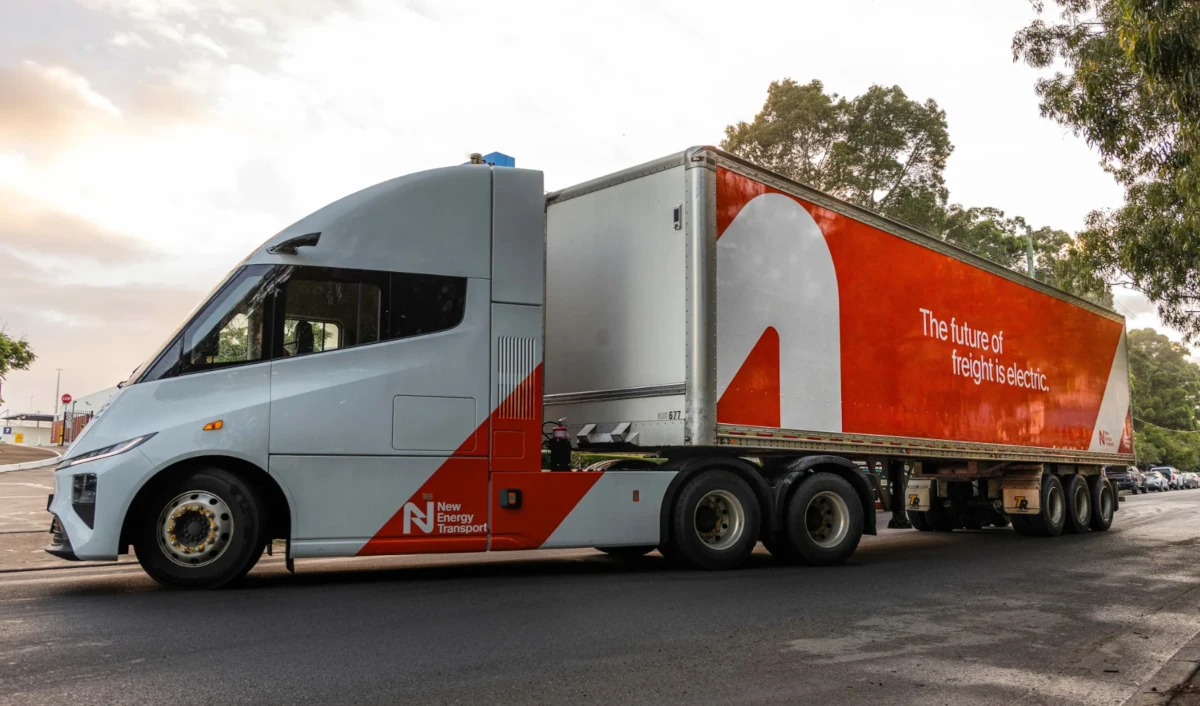
Australian freight start-up plans 20 electric prime movers by end of year, and mobile chargers
Australian electric freight company New Energy Transport (NET) has announced an ambitious plan to deploy 20 electric prime movers by the end of this year, targeting key transport corridors between Sydney and regional centres. This expansion is supported by a recent $5 million funding round, which will also finance six mobile ultra-fast charging units to be initially installed at NET’s first electric truck charging hub in Wilton, south of Sydney. The company aims to meet growing demand from major Australian transport buyers by providing reliable, zero-emission freight services across important routes. NET positions itself as Australia’s first vertically integrated electric freight platform, with initial operations covering corridors linking Sydney to Wollongong, Newcastle, Yass, and Canberra, before extending to regional hubs such as Griffith and Wagga. The company plans to expand its network to include Adelaide, Melbourne, and Brisbane by 2031. Central to this strategy is the Wilton hub, set to become Australia’s largest heavy electric trucking depot, although its full completion is not expected until late 2027. To bridge this gap, NET will deploy modular, mobile charging units capable of rapid installation and relocation, enabling flexible support for expanding freight routes. The mobile chargers, each equipped with 640 kW fast chargers and supported by 125 kW batteries to manage grid demand, will collectively deliver up to 2 MW of power. This innovative approach addresses a key bottleneck in the electric trucking sector: the slow rollout of charging infrastructure. NET co-founder Daniel Bleakley emphasises that while electric truck manufacturing is progressing, the availability of charging facilities remains a critical constraint, urging for prioritised grid connections to accelerate infrastructure development. Although the supplier of NET’s electric prime movers has not been officially confirmed, the company has trialled Windrose trucks and is preparing to unveil a Volvo electric prime mover for its first customer. Bleakley warns of an impending diesel supply crisis in Australia, driven by global oil market instability, which he believes will trigger a broader road freight crisis. This looming challenge underpins NET’s accelerated deployment plans, with the 20 electric trucks expected to cover over 10,000 kilometres daily and save approximately 2.5 million litres of diesel annually. NET’s co-CEO Fredrik Pehrsson highlights the economic and productivity advantages of electric freight, citing a recent successful end-to-end electric delivery from Sydney to Canberra on a single charge that was faster and cheaper than traditional diesel operations. With further diesel price volatility anticipated, NET argues that early adoption of electric heavy vehicles offers a competitive edge through stable and predictable freight costs. The company is preparing for additional fundraising to support its growth, signalling a strong commitment to transforming Australia’s road freight sector.
This summary was generated by AI. The full article is published on The Driven.