
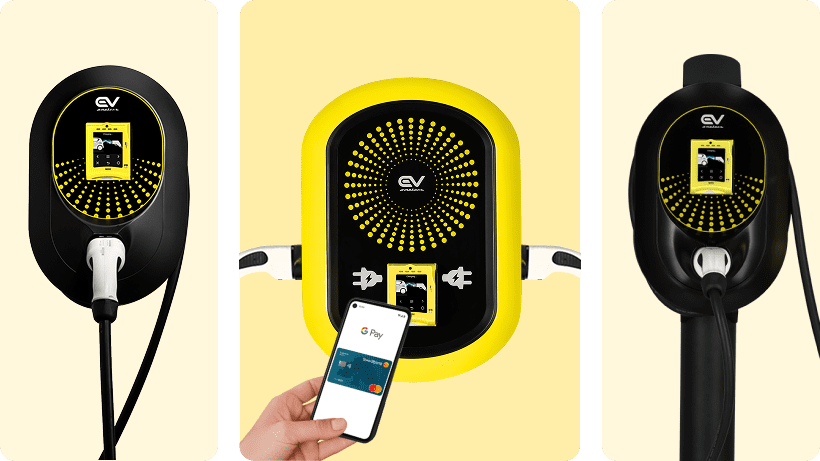
Nayax introduces EV Meter to support destination charging across the UK and Europe
Nayax has launched EV Meter, an integrated AC charging solution aimed at commercial sites across the UK and Europe seeking to provide paid electric vehicle charging. The system combines Nayax’s payment technology, charging hardware, and a cloud-based management platform into a single offering, simplifying the deployment and operation of EV chargers. Designed primarily for locations where vehicles remain parked for extended periods, such as hotels, campsites, holiday parks, and parking facilities, EV Meter supports both single and dual 22 kW AC chargers. The solution offers a seamless user experience, allowing drivers to access tariff details, initiate charging sessions, and monitor progress via a QR code and mobile interface. This interface provides real-time updates on energy consumption and costs, with digital receipts sent by email for convenience. For site operators, the platform enables remote monitoring and management of the charging infrastructure, streamlining maintenance and operational oversight. EV Meter has already been implemented at several UK locations, including Arle Court Park and Ride in Gloucester, where it forms part of a destination charging network operated by Connected Kerb. Andy Knight, Nayax’s Energy Sales Director, emphasised that while payment systems are crucial for commercial viability, site owners require a holistic solution. He highlighted EV Meter’s ability to integrate charging hardware, payment processing, and management tools into a cohesive system, simplifying the introduction of paid EV charging facilities. The introduction of EV Meter reflects a growing trend towards destination charging solutions that cater to drivers who leave their vehicles for longer durations, addressing a key gap in the UK’s EV infrastructure. By offering an all-in-one platform, Nayax aims to reduce the complexity and cost for commercial operators, potentially accelerating the adoption of EV charging at a wider range of locations. This development could play a significant role in supporting the ongoing transition to electric mobility across the region.
This summary was generated by AI. The full article is published on Charged EVs.