
Dukosi, A123 and Nuvation combine chip-on-cell contactless monitoring with LFP cells in BESS proof of concept
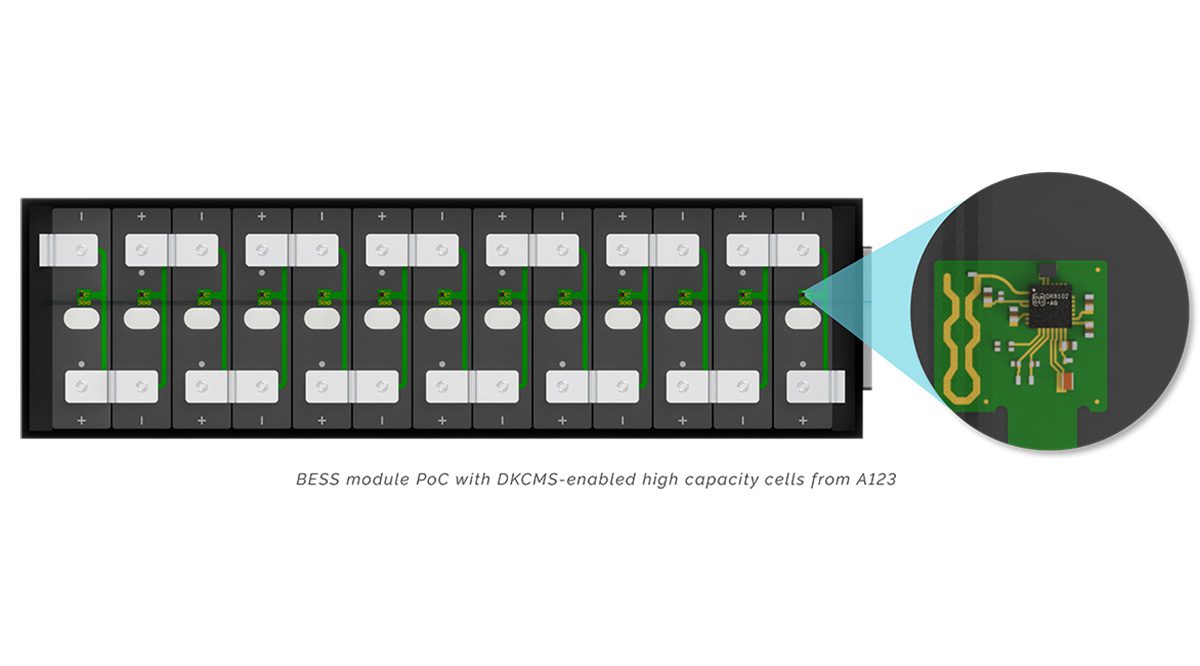
Dukosi, A123 Systems, and Nuvation Energy have collaborated to develop a proof-of-concept battery energy storage system (BESS) that integrates advanced lithium iron phosphate (LFP) cells with innovative contactless cell monitoring and a utility-grade battery management system (BMS). The design features A123’s large-format 587 Ah LFP prismatic cells combined with Dukosi’s chip-on-cell contactless monitoring technology and Nuvation’s robust BMS. This reference platform targets North American BESS developers and system integrators, offering a pre-validated and regulatory-compliant module stack that simplifies the integration process for utility-scale projects. The prototype module employs a 1P13S configuration at 41.6 volts, a common architecture for utility BESS racks. A123’s LFP cells are notable for their proprietary US-developed chemistry, which emphasises long cycle life and excellent thermal stability, addressing critical performance and safety concerns in large-scale energy storage. Dukosi’s contactless monitoring system uses a unique C-SynQ protocol, allowing each cell to communicate wirelessly with a central hub. This eliminates the need for traditional wiring harnesses, which are often prone to failure, thereby enhancing system reliability and enabling easier retrofitting or scaling of the monitoring layer without rewiring. Nuvation Energy contributes its Level 2 BMS, which manages both cell- and stack-level control for systems up to 1,500 V DC. The BMS platform is UL 1973 recognised for functional safety, a key certification that supports warranty claims and compliance in commercial and utility installations. Nuvation’s extensive experience, gained from deployments at hundreds of commercial and utility-scale sites since 2015, underpins the system’s reliability and operational readiness. This collaboration aims to streamline the development of safer, more scalable, and easier-to-maintain battery storage solutions for the growing energy storage market. The integration of these technologies marks a significant step forward in battery system design, particularly in terms of reducing failure points and simplifying maintenance. By combining high-performance LFP cells with contactless monitoring and a proven BMS, the platform offers a compelling solution for developers seeking to meet stringent safety and regulatory standards. Moving forward, this proof of concept could influence future BESS designs, potentially accelerating adoption of contactless monitoring technologies in large-scale energy storage applications.
This summary was generated by AI. The full article is published on Charged EVs.