
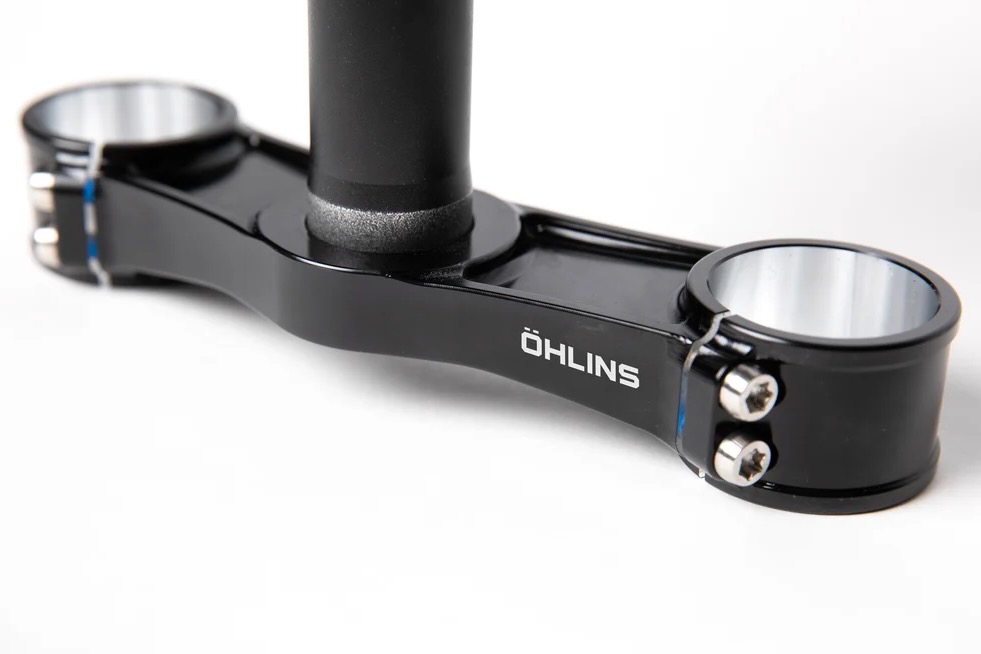
Öhlins Introduces New, Stiffer Downhill Fork Crown for More Responsive Handling
Öhlins has unveiled a new, stiffer crown for its DH38 downhill fork, aiming to enhance rider control and handling precision in competitive downhill racing. Drawing inspiration from motocross technology and developed in close collaboration with its factory downhill team, the new crown is designed to meet the rigorous demands of modern World Cup racing. Although the company has not disclosed exact stiffness figures, extensive testing on the World Cup circuit demonstrated a significant improvement in steering responsiveness and overall handling stability. The redesigned crown focuses on delivering sharper steering and greater confidence for riders tackling high-speed, technical terrain. Öhlins highlights that the increased stiffness contributes to improved front-end stability, allowing riders to maintain precise line choices and push harder with more assurance. The design incorporates multiple offset options—46, 50, 54, and 58 mm—to enable riders to fine-tune their bike geometry and optimise ride feel according to their preferences and course requirements. Torkel Sintorn, Director of Öhlins Bicycle Division, emphasised the collaborative development process, noting that input from elite athletes was crucial in rethinking the front-end interface. The MX-inspired approach prioritises precision and stability, which are vital for aggressive downhill riding. This innovation not only enhances performance but also instils greater rider confidence, potentially translating to faster race times and improved podium prospects. The new crown is available separately, allowing existing DH38 fork owners to upgrade without replacing the entire fork. Pricing for the crown is set at $475 USD or 499 EUR, with the complete DH38 m.2 fork retailing at $1,800 USD. Officially launched on 7 June 2026, the product is now accessible through authorised dealers worldwide, offering riders a practical option to enhance their downhill setup with proven race technology.
This summary was generated by AI. The full article is published on BikeRumor.